
Introduction
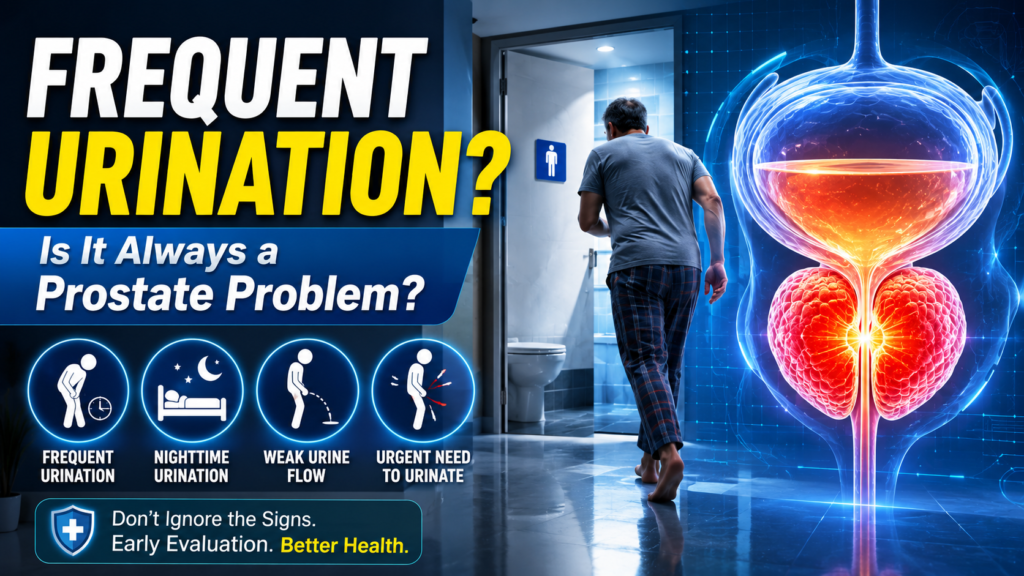
Frequent urination is one of the most common urinary complaints among adults, particularly men over the age of 50. Many people immediately assume that frequent trips to the bathroom mean they have an enlarged prostate or even prostate cancer. While prostate problems are a common cause, they are certainly not the only reason for frequent urination.
Several conditions—including urinary tract infections, diabetes, overactive bladder, kidney stones, and certain medications—can also lead to frequent urination. Understanding the underlying cause is essential because treatment varies depending on the diagnosis.
If you are experiencing persistent urinary symptoms, consulting an experienced urology specialist in Bhubaneswar can help identify the cause early and prevent potential complications.
What is Frequent Urination?
Frequent urination means needing to pass urine more often than usual. While there is no fixed number that defines “normal,” most healthy adults urinate around 6–8 times a day, depending on their fluid intake.
If you find yourself visiting the bathroom much more often or waking up several times at night to urinate, it may indicate an underlying health issue.
Common Symptoms Associated with Frequent Urination
Frequent urination may occur alone or with other symptoms such as:
- Sudden urge to urinate
- Difficulty holding urine
- Weak urine stream
- Burning sensation during urination
- Blood in urine
- Pain in the lower abdomen
- Feeling that the bladder is not completely empty
- Waking up multiple times at night to urinate (Nocturia)
The combination of symptoms often helps doctors determine the underlying cause.
Is Frequent Urination Always Caused by Prostate Problems?
No.
Although prostate conditions are a common cause in men, frequent urination can result from many different medical conditions.
Let’s explore the most common causes.
1. Benign Prostatic Hyperplasia (BPH)
One of the leading causes in older men is Benign Prostatic Hyperplasia (BPH), commonly known as an enlarged prostate.
As the prostate enlarges, it presses against the urethra, making it harder for urine to pass.
Common Symptoms
- Frequent urination
- Weak urine stream
- Difficulty starting urination
- Dribbling after urination
- Nighttime urination
- Feeling of incomplete bladder emptying
BPH is not cancer, but it should be evaluated and treated if symptoms affect daily life.
2. Prostate Cancer
Early prostate cancer often causes no symptoms, but as it progresses, it may lead to:
- Frequent urination
- Difficulty passing urine
- Blood in urine
- Blood in semen
- Pelvic discomfort
These symptoms can resemble BPH, making proper evaluation essential.
3. Urinary Tract Infection (UTI)
UTIs can affect both men and women.
Common symptoms include:
- Burning while urinating
- Frequent urination
- Cloudy urine
- Fever
- Lower abdominal pain
UTIs require prompt treatment to prevent kidney infections.
4. Overactive Bladder (OAB)
An overactive bladder causes the bladder muscles to contract unexpectedly.
Symptoms include:
- Sudden urge to urinate
- Frequent urination
- Urine leakage
- Nighttime urination
Lifestyle changes, medications, and bladder training often help manage this condition.
5. Diabetes
Frequent urination can be an early symptom of diabetes.
High blood sugar causes the kidneys to remove excess glucose through urine, increasing urine production.
Other symptoms may include:
- Excessive thirst
- Fatigue
- Weight loss
- Blurred vision
6. Kidney Stones
Small stones moving through the urinary tract may irritate the bladder.
Symptoms include:
- Severe back or side pain
- Blood in urine
- Frequent urination
- Burning sensation while urinating
7. Excessive Fluid or Caffeine Intake
Drinking large amounts of:
- Tea
- Coffee
- Soft drinks
- Alcohol
can temporarily increase urination.
Reducing caffeine often improves symptoms.
8. Certain Medications
Diuretics (“water tablets”) prescribed for high blood pressure or heart disease increase urine production.
Always discuss medication side effects with your doctor before making changes.
When Should You Be Concerned?
You should seek medical advice if frequent urination is accompanied by:
- Blood in urine
- Fever
- Severe pain
- Difficulty passing urine
- Weight loss
- Persistent symptoms lasting more than a few days
- Waking up multiple times every night
Ignoring these symptoms may delay the diagnosis of serious conditions.

Why Choose Dr. Rahul Jena?
Dr. Rahul Jena is a Consultant Uro-Oncologist and Robotic Surgeon at Bagchi Sri Shankara Cancer Centre and Research Institute, Bhubaneswar.
As the first fellowship-trained Uro-Oncologist and Robotic Surgeon in Odisha, he has over 12 years of experience in diagnosing and treating a wide range of urological conditions, including enlarged prostate, prostate cancer, kidney stones, bladder disorders, and urinary tract diseases.
Patients choose Dr. Rahul Jena because of his:
- Expertise in prostate and urinary disorders
- Advanced diagnostic techniques
- Robotic and minimally invasive surgery
- Personalized treatment plans
- Compassionate patient care
- Evidence-based medical practice
If you are searching for a trusted urology specialist in Bhubaneswar, Dr. Rahul Jena offers comprehensive evaluation and advanced treatment tailored to each patient’s needs.
Conclusion
Frequent urination is a symptom—not a disease. While prostate enlargement is a common cause in older men, it is not the only explanation. Conditions such as urinary tract infections, diabetes, kidney stones, and overactive bladder can also cause similar symptoms.
The key is not to ignore persistent urinary changes. Early evaluation helps identify the underlying cause and ensures timely treatment, improving both urinary health and overall quality of life.
Frequently Asked Questions (FAQs)
No. It can also be caused by urinary tract infections, diabetes, kidney stones, overactive bladder, excessive caffeine intake, or certain medications.
Most healthy adults urinate around 6–8 times a day, though this varies depending on fluid intake and individual health.
Yes. Although early prostate cancer may not cause symptoms, advanced disease can lead to frequent urination, difficulty urinating, and blood in the urine.
Occasional nighttime urination may not be serious, but frequent episodes should be evaluated, especially if accompanied by other urinary symptoms.
You should consult a urologist if frequent urination persists, worsens, or is associated with blood in the urine, pain, fever, or difficulty passing urine.
EXCELLENT Based on 138 reviews
 Posted on Google
 PITABASH KHAMARIDr. Rahul Jena, at Bagchi Hospital, is highly professional, knowledgeable, and very patient-friendly. He explains the condition and treatment clearly and ensures the best care for his patients. Highly recommended for anyone seeking expert uro-oncology treatmentPosted on Google
 jyotirmayee mahanandaI would like to sincerely thank Dr Rahul Jena for the excellent care he provided to my mother during her nephrectomy surgery. The surgery was successful under his guidance, and we felt very safe and confident throughout the treatment. After the operation, when my mother was scared and unable to walk, Dr Rahul Jena kindly encouraged her and even sang a small song, “Chhi Chhi Chhi Re Nani,” to make her smile and motivate her to start walking again. That moment meant a lot to our family and showed how caring and supportive he is towards his patients. His calm and reassuring words give great strength to patients and their families. It truly feels that half of the disease is cured just by the positive and encouraging way he talks to his patients. We also deeply appreciate his patience, kindness, and the protectiveness he showed while caring for my mother. Thank you, doctor, for your dedication, compassion, and support. We will always remain grateful for everything you have done for my mother’s recovery.Posted on Google
 Sovan TaraiWe consulted Dr. Rahul Jena as a second opinion for treating Metastatic Adenocarcinoma of Prostate Origin. Right from the first visit Dr. Rahul explained to us our current condition explicitly with complete clarity. All treatment options were also laid out us to proceed further. I could feel my father's confidence growing and feeling a lot better just from a 25 mins consultation. That's what awareness and subject clarity does to you. We were never made aware what our situation is and what exactly was in those reports for tests that we had run as advised by the earlier consulted Doctors. It's been more than a month now we are getting treatment and as a son I could not be more happier seeing my father more energetic, more agile and just as an annoying as before. Thank You Dr. Rahul Jena. You have been informative, empathetic and all your treatment till now has hit the bullseye.Posted on Google
 Bikash PadhiRahul sir wasn't particularly dealing with my health issue but he picked up my call, answered my query elaboratively and even heard my questions patiently. I mean, I am speechless. Highly recommended. Benign soul.Posted on Google
 PrakashDr. Rahul Jena is a rare kind of doctor. He treated my grandfather with so much skill and genuine compassion. What we loved most was his personality♥️♥️..We’ll never forget how he’d joke with my grandfather about his green sweater, telling him, ( mausa tame ta pura green sweater re hero lagucha ). Those small moments that made us feel safe and supported. He gave my grandfather strength when he needed it most. Thank you, Dr. Jena, for being an amazing doctor and a man with a golden heart ✨.Posted on Google
 Swagat Soumya SarangiDr. Rahul Sir is Highly skilled in uro oncology and explains everything with great clarity. Their diagnosis and treatment approach is precise and he make patients feel comfortable and confident. We are very satisfied with the care and strongly recommend them.Posted on Google
 Kishore pattnaikDr. Rahul Jena is an exceptional uro-oncologist who is truly amazing . His dedication to his patients goes far beyond medical expertise—he brings compassion, patience, and genuine humanity into every interaction. From the very first consultation, he made me feel heard. He explains very minutely the treatment with remarkable clarity and reassurance, easing fears I didn’t even realize I had. I can say with complete sincerity that he is one of the most remarkable and promising doctors I have encountered in recent years—not just in the country, but worldwide I would have met .Greatful